
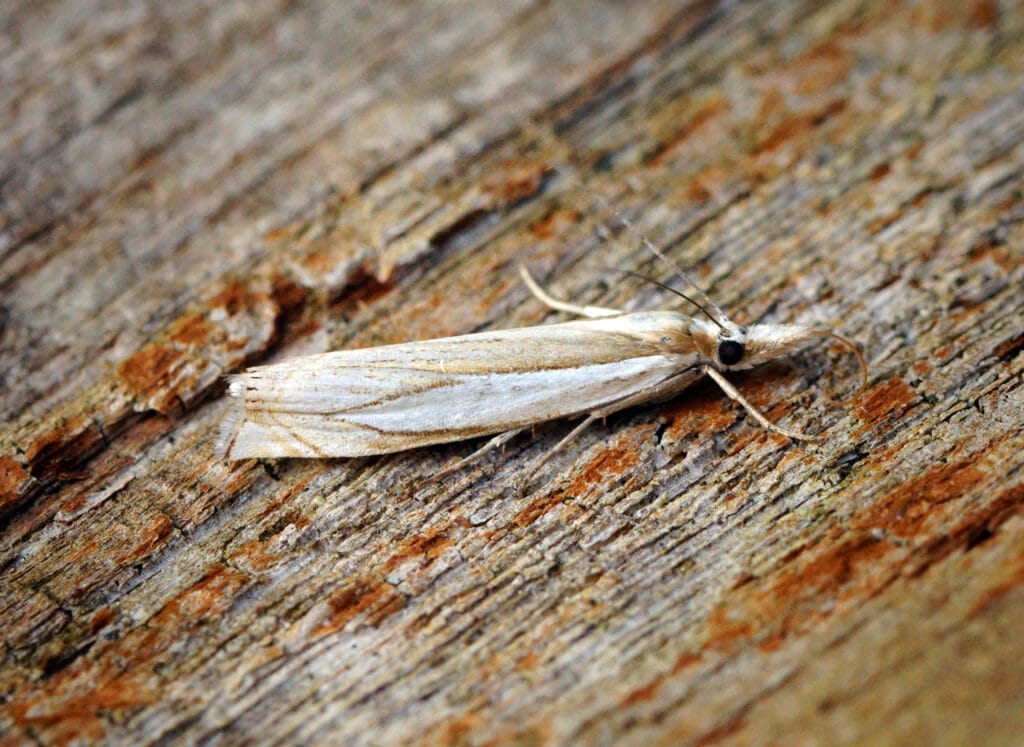
Every June, small tan moths lift out of Davis County lawns at dusk, flying in short, jerky zigzags a few inches above the grass before dropping back into the thatch. Most homeowners barely notice them. We’ve watched for that exact pattern every June since 1981, because those moths are the first sign of the insect that damages more Davis County lawns than any other: the sod webworm.
Sod webworm isn’t a beetle grub and it isn’t a weevil. It’s a caterpillar, the larval stage of a small lawn moth, and it feeds in a different place on the grass plant than the pests we’ve covered in this series before. That distinction matters, because it changes both how you spot the damage and what you should do about it.
By July, the moths you saw flying in June have grown into inch-long caterpillars chewing grass blades and crowns right at the soil surface, and the lawn starts showing thin, ragged brown patches that a lot of homeowners mistake for drought stress. The patches aren’t drought. They’re feeding damage, and the moths six weeks earlier were the warning nobody read.
How to Tell Sod Webworm from Grub Damage in Under a Minute
The fastest way to know what you’re actually dealing with is the tug test. Grab a handful of the damaged turf and pull. If it lifts up easily, like peeling back a loose carpet, that’s grub damage, which we cover in our post on identifying grubs in the lawn, because the larvae have eaten the roots underneath. Sod webworm does the opposite. Pull on a sod webworm patch and it stays put. The roots are untouched. These caterpillars feed at the surface, on the blades and the crown, not below ground, so the lawn holds together even while it looks ragged and thin on top.
Part the grass at the edge of a damaged patch and look closely at the thatch layer. You’re looking for two things: small green-to-brown pellets that look like coarse ground pepper, which is caterpillar frass, and thin silk-lined tunnels running through the thatch where the larvae hide during the day. They come out to feed at night, which is why the damage seems to appear overnight even though it’s been building for weeks. The caterpillars themselves are grayish to greenish-brown with rows of small dark spots down the body, and they curl up when you disturb them, the same as most caterpillars do.
If you want a more definite check, mix a few tablespoons of dish soap into a couple of gallons of water and pour it over a one-square-yard section at the edge of a patch. Within a few minutes, irritated larvae surface where you can see and count them. On healthy turf, ten to fifteen larvae per square yard is generally the point where treatment is worth considering. On a lawn that’s already stressed from heat or drought, as few as five can justify treating, because stressed turf can’t outgrow the damage the way a vigorous lawn can.
Utah’s climate generally supports one to two generations of sod webworm a year. The moths you see flying in late May and June are laying the eggs that become the caterpillars doing the heaviest feeding in July, and in some years a second, smaller flight shows up later in the summer. For grub-specific identification, our earlier post on grubs in the lawn walks through that diagnosis in more detail. It’s worth telling the two apart, because the fix is not the same.
.jpg)
What Actually Helps While the Larvae Are Feeding
A few changes to how you maintain the lawn make a real difference, both in how much damage shows and how fast the lawn recovers.
Mow higher. Sod webworm damage is far less noticeable, and the lawn tolerates it much better, above about two and a half inches. Taller grass also shades the soil surface, which makes it a little less inviting to moths looking for a place to lay eggs.
Water deep and infrequent, not daily and shallow. A lawn that’s well watered and growing vigorously can outgrow webworm feeding almost as fast as the caterpillars can do it. A lawn that’s already drought-stressed can’t keep up, which is exactly why the worst damage every July tends to show up on slopes, park strips, and the hard-to-water spots that dry out first.
Deal with the thatch. The larvae live in it, tunnel through it, and hide in it during the day. A thick thatch layer is a nursery for the next generation. Core aeration or dethatching removes that habitat and makes the lawn healthier at the same time.
If you’re reseeding a thin or repeatedly damaged area, consider a turf-type perennial ryegrass or tall fescue carrying an endophyte, a beneficial fungus that lives inside the grass plant and makes the blades unappetizing to caterpillars. Kentucky bluegrass, the grass in most Davis County lawns, doesn’t carry this protection on its own, which is one more reason overseeding thin spots with an endophyte-enhanced grass is worth the extra step.
None of this requires a call to anyone. Mow high, water correctly, and keep thatch under control, and a lot of Davis County lawns never develop damage bad enough to notice.
Catching Sod Webworm Before the Damage Shows
The single biggest factor in how well sod webworm treatment works is timing. A young caterpillar, freshly hatched, is easy to stop. A caterpillar that’s been feeding for weeks and is nearly full grown is not, and by the time it’s that size, it’s already done the feeding that left the lawn looking ragged.
That’s why we treat sod webworm as a scouting problem before it’s a spraying problem. Watching for the dusk moth flight in late May and June tells us when eggs are being laid, which tells us when to expect young larvae, which tells us when treatment will actually catch them before they’ve done much damage. Waiting until a homeowner calls about a brown patch in July means the caterpillars are already in their last, most damaging stage, and treatment at that point is playing catch-up instead of getting ahead of it.
Because these caterpillars feed right at the surface rather than down in the root zone, we can treat them without the same deep root-zone soaking that a below-ground pest needs. What matters far more than how deep the product goes is when it goes down. We apply it in the evening, timed to when the larvae are active near the surface, and we time the whole application to the early stage of the life cycle rather than to whatever week a homeowner happens to notice the lawn looking rough. That’s the difference between one well-timed application and a lawn that needs repeated rescue treatments for the rest of the summer.
If your lawn is showing thin, ragged patches this summer, or if you’d rather we start watching for the moth flight before any damage shows at all, our lawn insect control service covers sod webworm along with the other insects that damage Davis County turf. You can see everything we offer for lawn pests and overall lawn health on our lawn care services page.