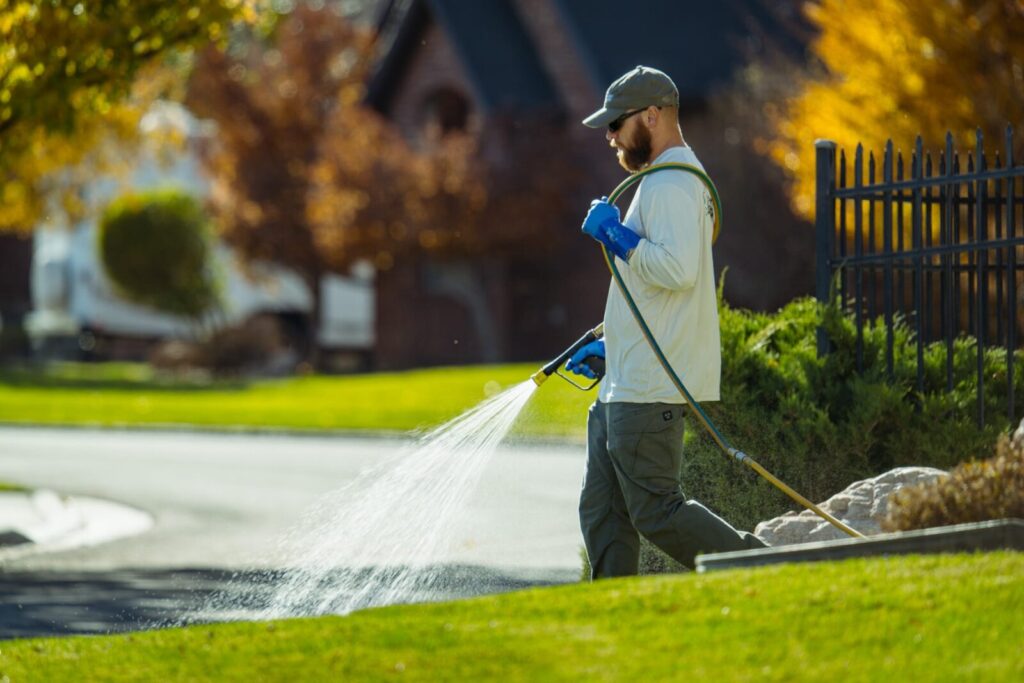
Our full season lawn program runs five visits from March through October, timed to match Utah’s growing season and what Davis County lawns need at each stage. We start with pre-emergent and fertilizer in early spring to wake your lawn and block crabgrass before it takes hold. As temperatures climb, we shift to a slow release liquid blend fertilizer 28-0-2 and iron that helps keep your lawn vibrant and healthy through the summer months. Every visit includes targeted broadleaf weed control.
We mix our fertilizer locally, formulated for Davis County soil, not shipped in from a national supplier. That means the right balance of nitrogen, iron, and nutrients for Kentucky bluegrass growing in Utah’s clay-heavy, alkaline conditions. Four of five visits include herbicide treatment, so weed control stays consistent through the entire season.
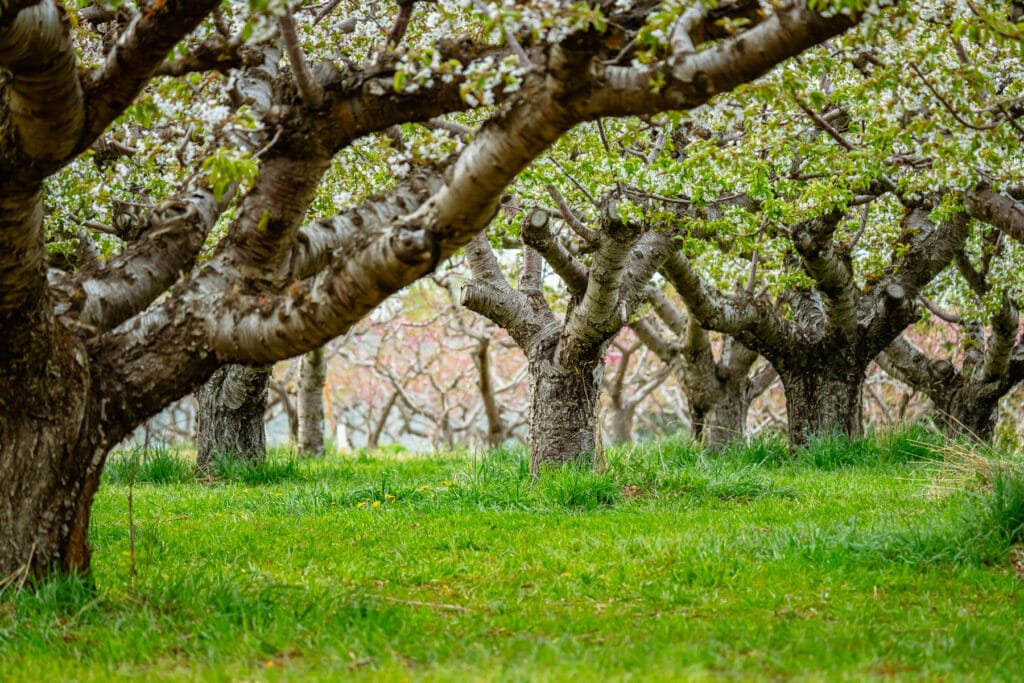
Trees and shrubs are often the most valuable part of a Davis County landscape, and they face specific challenges in Utah’s dry climate and alkaline soil. Our tree and shrub program includes four applications per year: deep root feeding in spring and fall, plus two preventative insect control treatments during the growing season.
Deep root feeding delivers iron, phosphorus, and potassium directly into the root zone below the surface. This is critical in Davis County, where alkaline soil locks out the nutrients trees need to stay healthy. We also offer dormant oil spraying in early spring to coat branches and stop insect eggs before they hatch. This is especially important for fruit trees and for preventing aphid, beetle, and spider mite damage that can stress trees quickly if left untreated.
Utah homes deal with spiders year-round, especially along foundations and in window wells. Our exterior spider barrier is applied directly to your home’s foundation, lower windows, window wells, and attached garage. Each treatment lasts up to 45 days and prevents spiders and insects from crossing the barrier into your home. The full program includes four seasonal treatments from early spring through late fall. Sign up by March 31st to receive 10% off the program.
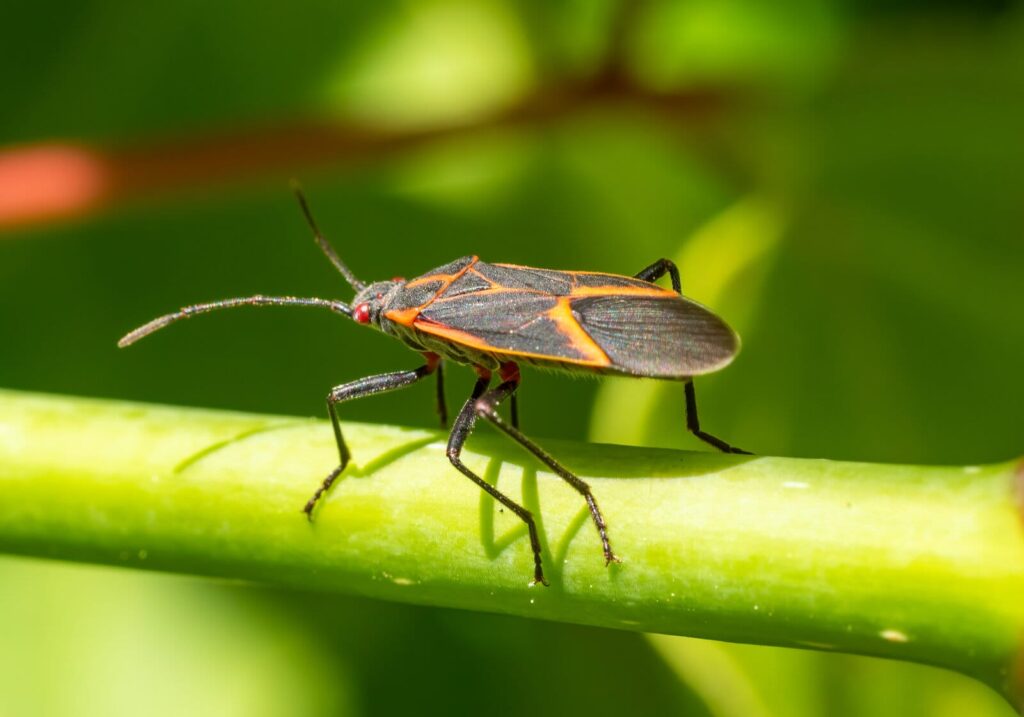
For active problems inside your home, such as spiders, ants, or earwigs, we offer interior pest control with safe, certified treatment. We also handle wasps, hornets, and yellow jackets around eaves, gutters, soffit, and fascia areas. This is not a preventative treatment. It targets active nests and high-traffic areas where stinging insects gather near your home.
Every lawn in Davis County is different. Soil conditions, shade, watering habits, and past treatments all shape what your lawn needs. Beyond our seasonal programs, we offer several targeted services.
Core aeration loosens Utah’s heavy clay soil so water and nutrients can reach deeper into the root system. We recommend aerating at least once a year, typically in early spring.
For lawns battling necrotic ring spot or patch fungus, we offer a dedicated treatment program with back-to-back fungicide applications and a specialized 60% slow release liquid fertilizer and iron combo designed to promote slower growth and vibrance while we work to reduce and improve fungus infected areas with fungicide. This program paired with customer over-seeding yields quality results.
We also provide grub suppression using Acelepryn, applied in spring before grubs hatch and begin feeding on roots. That same application controls surface-feeding pests like sod webworm through the season. Not sure what your lawn needs? Contact us for a free consultation.
Davis County lawns don’t behave like lawns in other states. Clay soil, dry summers, and sudden heat stress require timing and treatments that actually match local conditions. Since 1981, we’ve learned what works here through experience, not guesswork, and we adjust our programs as the season unfolds.
Prepay your full season lawn program and save 7% off your total bill. It is a simple way to lock in service and keep your lawn on track.
Utah's clay soil compacts fast, choking out grass roots. Core aeration opens up the soil so water and nutrients reach deeper, giving your lawn room to grow strong.
Send a new customer our way and receive a $15 referral reward for every sign up of our full-season lawn program. Start referring today!


Our FAQs are designed to provide quick answers to questions that customers commonly have about our product and services. We hope you find the information you are looking for. Please feel free to contact us to learn more about our amazing services.
YES! Once the snow has cleared and the lawn has dried out some, a light raking (with a PLASTIC leaf rake only) remove lingering fall leaves and grass blades that did not survive winter. Raking loosens matted grass clumps, which can smother new growth and helps with snow mold recovery. Too much dead, matted grass will prevent your lawn from breathing and taking in important nutrients as well.
Oftentimes, invasive grasses are mistaken as crabgrass (annual weed). But, there are actually quite a few other unwanted grasses that it could be (perennial weeds)— the vast majority are considered uncontrollable grasses (vs controllable) and will need to be killed out of the lawn with glyphosate (roundup). They often appear as clumps, wider blades, faster growing, and lighter color than Kentuckyblue grasses. Spray the plant with gyphosate and repeat as needed until dead. Dig out the dead grass and repair with sod or by re-seeding the area. Keep moist until rooted or seed start to sprout.
In Davis County, it is most likely call Necrotic Ring Spot (NRS) or frog eye. It is the most destructive disease of Kentucky bluegrass in Utah. Necrotic ringspot is particularly damaging to bluegrass because it is a perennial problem and the fungus attacks and kills the roots and crowns. Thus, recovery from a disease outbreak is very slow. Best practices include a program with slow-release, low-dose nitrogen fertilizers, fungicides, coupled with strict watering and maintenance practices. For more information or to sign up for the fungus lawn program, please call or text today!
Rain is perfect for the spring pre-emergent application, as pre-emergent needs to be watered in within 14 days of treatment to activate. Water is needed to “set” the pre-emergent and allow for protection against seed germination. As well, fertilizers need water too. “Water” can come from any of the following: precipitation, snow melt, or dew point.
Grub suppression (Acelepryn) applications are applied April-May each season as weather and temperatures allow. Acelepryn is more than just outstanding season-long grub control. That same application for grubs will control many key surface feeding pests including several species of caterpillars (sod webworm). And, Acelepryn is flexible as it can be watered in, but it is not required for the full benefit of the application.
Dog urine spots are caused by concentrated salts and nitrogen that burn turf. The best immediate step is to flush the area thoroughly with water as soon as possible to dilute the salts. Long-term recovery usually requires improving soil health and encouraging new growth. In many cases, damaged turf will need overseeding or patch repair once conditions are right. Repeated urine damage in the same area may require traffic rotation, soil amendment, or designated pet areas to prevent ongoing stress.
When applied correctly and allowed to dry, the products we use are considered safe for pets. As a precaution, we recommend keeping pets off treated areas until applications have dried completely, which typically takes a few hours depending on weather conditions. If you have specific concerns about sensitivities or recent applications, please contact us before treatment so we can review product details and timing with you.
Water turn on/off dates, as well as weekly allowances, vary season-to-season. Please reach out to the secondary water management provider in your area for specific details. Please Note: If your secondary water is metered, getting sign-up for the online portal (ask your water management provider) to manage your water usage is invaluable to utilizing the monthly alloted amount most efficiently and effectively.