
Crabgrass shows up in July, but the window to stop it closes in March. That timing gap catches Davis County homeowners off guard every year. By the time you spot crabgrass spreading across your lawn, your best treatment options are gone.
The good news is that prevention works really well when you time it right. Utah’s spring weather is opening that window now. The trick is reading soil temperature, not the calendar.
This guide walks through how crabgrass grows in Davis County. It covers when to apply a crabgrass preventer for the best results this spring. It also pulls from USU Extension and other research programs serving Utah lawns.
How Crabgrass Works in Davis County Lawns
Crabgrass is an annual weed. It grows from seed each spring, spreads through summer, and dies in fall. Before it dies, each plant drops thousands of seeds into your lawn. Those seeds sit dormant all winter, waiting for warmer soil.
The trigger is soil temperature, not air temperature. According to USU Extension, crabgrass seed germinates when soil temperatures reach about 55°F. That usually happens in Davis County from late March through mid-April.
A warm February pushes that window earlier. A cold spring delays it. This is why following a fixed calendar date does not work. Some years you need to apply pre-emergent in mid-March. Other years early April is fine.
One important note from USU: if you see weedy grass in April or May, it is probably not crabgrass. Real crabgrass usually does not show up until late spring or early summer.
Why Soil Temperature Beats the Calendar
Research from Purdue Turfgrass Science shows crabgrass starts germinating at 57 to 64°F. That measurement is taken at one inch deep. Mass germination kicks in around 73°F.
You can buy a soil thermometer at any garden center for around $10. Push the probe one to two inches into your lawn. Take readings at dawn for three to five mornings in a row. When morning soil temperatures hit 55°F consistently, your window is closing fast.
USU Extension’s research on residential lawns notes a useful early warning sign. Soil temperatures in the 50 to 55°F range mean crabgrass will germinate within a few weeks. That is your green light to apply pre-emergent.
Reading the Forsythia and Lilac Signal
There is a natural backup signal you can watch in Davis County neighborhoods. Forsythia bushes bloom early in spring with bright yellow flowers. Lilacs follow a few weeks later.
USU Extension horticulturists recommend applying pre-emergent “after forsythia are done blooming and just before lilacs start.” This bloom timing matches the soil temperature window for crabgrass germination.
One important caveat: do not wait until lilacs are in full bloom. Purdue research shows forsythia is actually a late warning, not a starting bell. By the time forsythia blooms are fading, crabgrass is about to germinate. Treat the forsythia bloom as a reminder to hurry, not as the green light itself.
When to Apply Pre-Emergent in Davis County
USU Extension publishes a Northern Utah Turfgrass Management Calendar. It lists Davis County specifically. The calendar recommends pre-emergent applications across March, April, and May. A second application in June or July catches late-germinating crabgrass that escapes the first round.
For most Davis County lawns, the first application falls between mid-March and mid-April. This timing matches University of Idaho Extension recommendations for the Treasure Valley. That region has a similar climate to the Wasatch Front.
The second application typically goes down 8 to 12 weeks after the first. Most pre-emergent products give you 60 to 120 days of residual control. Two applications cover the full crabgrass germination season in Utah.
If you have a lawn aeration scheduled, apply pre-emergent after aeration. Aerating after pre-emergent breaks the soil barrier the herbicide creates.
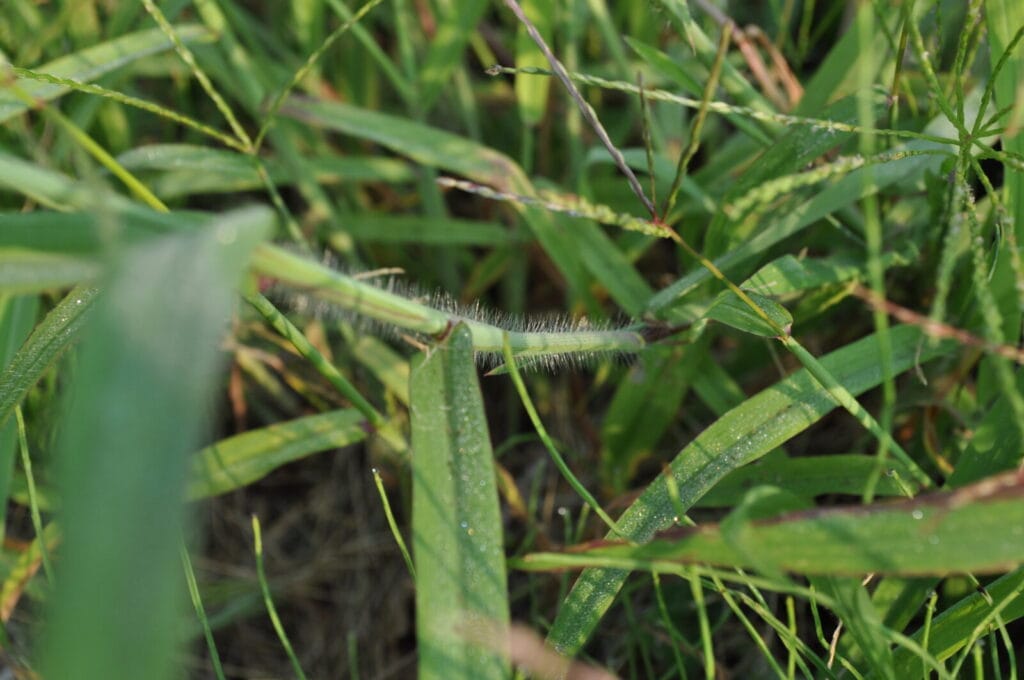
Getting the Most From a Crabgrass Preventer
Pre-emergent products do not work the moment they hit the lawn. They need water to move into the soil and form a barrier near the seeds. Colorado State University Extension recommends about half an inch of water within one to two days of application.
This creates a Davis County problem. Secondary water systems often do not turn on until April. Many homeowners apply pre-emergent in mid-March before their irrigation is running.
The workaround is timing your application to a forecast rainstorm. Apply two days before rain is expected. A light, soaking rain activates the product naturally.
Avoid applying pre-emergent right before a heavy thunderstorm. A downpour can wash the product off the lawn before it bonds with the soil. A gentle, steady rain is the best activator.
USU Extension lists three main active ingredients for residential pre-emergent control: dithiopyr, prodiamine, and pendimethalin. You will see these on bag labels under brand names like Dimension, Barricade, and Pendulum. All three give good to excellent crabgrass control when applied at the right time.
What If You Miss the Spring Window
If forsythia is already blooming and you have not applied pre-emergent yet, do not panic. Purdue research notes one important exception among pre-emergent products. Dithiopyr (sold as Dimension) provides early post-emergent activity on crabgrass.
Dithiopyr can kill crabgrass that has already sprouted. The seedlings need to still be in the one-tiller stage. That means very young plants with just one shoot. Once crabgrass matures past that stage, only post-emergent products designed for grassy weeds will work.
If your lawn ends up showing crabgrass clumps in June or July, treatment is still possible but harder. Multiple post-emergent applications may be needed. You will likely have bare patches where the crabgrass dies. Plan ahead for next spring with a properly timed pre-emergent program.
Healthy Turf Is Half the Battle
Pre-emergent stops crabgrass from germinating. A thick, healthy lawn keeps it from getting a foothold in the first place. Crabgrass is opportunistic. It moves into thin spots, bare patches, and stressed lawns where Kentucky bluegrass cannot compete.
Mowing height matters more than most homeowners realize. Cutting your lawn too short opens the canopy and lets sunlight reach the soil. Crabgrass seeds need that warmth and light to germinate. USU recommends mowing Kentucky bluegrass at 2.5 to 3 inches to shade the soil.
Proper fertilization in fall and spring builds dense turf that crowds out weeds. A weak, underfed lawn cannot compete with aggressive annual weeds like crabgrass. Deep, infrequent watering also helps. Light, frequent watering keeps the surface soil warm and moist, which is exactly what crabgrass seeds need.
The Easy Way to Hit the Pre-Emergent Window
Most Davis County homeowners want a green, weed-free lawn. They do not want to spend March mornings probing soil with a thermometer. That is fair.
Pre-emergent timing is a precision job, and the window is short. This is what we handle for our customers. Our pre-emergent treatment service tracks soil temperatures and watches the weather forecast. We time the application to your specific Davis County conditions.
We have been doing this work in Centerville, Kaysville, Farmington, and Bountiful since 1981. The schedule is built around how Utah soil actually warms, not a national calendar.
If crabgrass shows up in your lawn every summer, your prevention timing is the place to start. Take a look at our full lineup of lawn care services. Let us know how your lawn is looking this spring.