
Individual treatments and targeted solutions for Davis County lawns, trees, and homes. Each service can be scheduled on its own or paired with one of our seasonal programs.
Our seasonal programs cover most of what Davis County lawns and trees need through the year. But sometimes you need a specific treatment, a one-time service, or help with a problem that falls outside your regular program. This page covers every individual service we offer, from lawn fertilization and weed control to tree feeding and Pesticide applications for lawn, ornamentals/trees and homes. Each one is explained on its own page so you know exactly what it is, how it works, and why it matters in Utah.
Davis County lawns are almost all Kentucky bluegrass and some fescue types growing in clay-heavy, alkaline soil. That combination creates specific challenges around fertilization, weed control , soil compaction, insects, and fungus. These services address each of those problems individually.
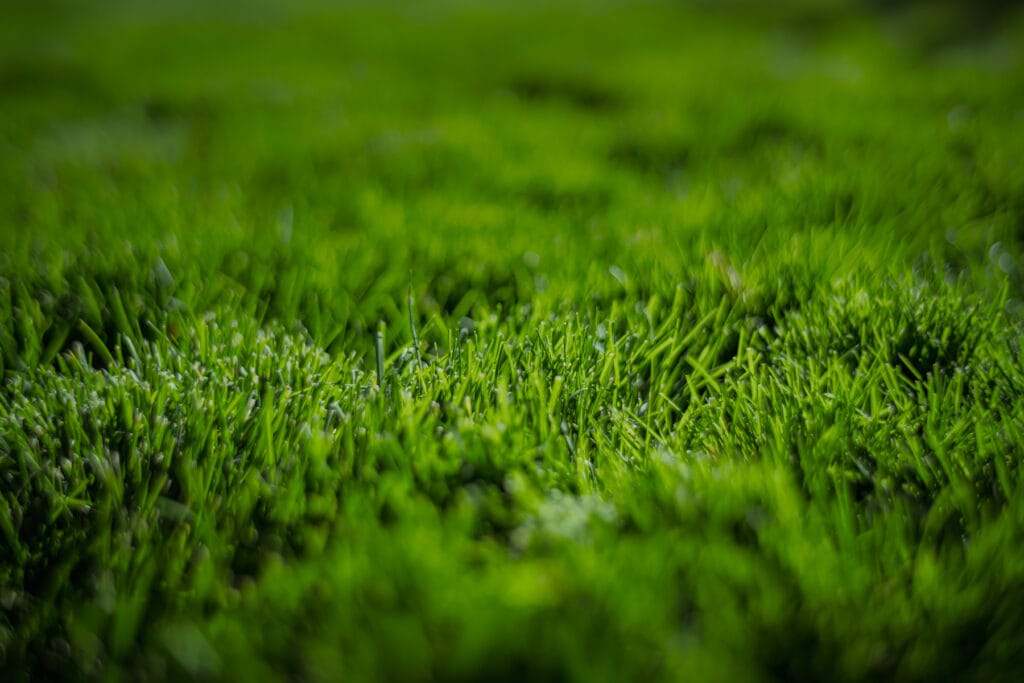
We mix our fertilizer locally, formulated for Davis County soil conditions. The blend of nitrogen, iron, and nutrients is matched to what Kentucky bluegrass needs in Utah’s alkaline clay, not what a national supplier blends for general use across multiple states. We time each application to the growing season so your lawn gets the right nutrients at the right point. Quick-release nitrogen in spring wakes your lawn out of dormancy. Slow-release granular in summer feeds roots steadily without burning in heat. Fall fertilizer supports root recovery heading into winter.
Broadleaf weeds like dandelion, clover, and bindweed are treated with targeted herbicide applications timed to when weeds are actively growing and most vulnerable. We spot treat individual problem areas and blanket treat full lawns depending on the situation. Timing matters in Utah. Herbicide formulations are adjusted based on temperature because what works in spring can burn turf in summer heat. We also watch for new weed growth after rain or changes in watering, which is when many weeds push through in Davis County lawns.
Pre-emergent goes down in early spring before soil temperatures trigger crabgrass germination. Once those seeds sprout, pre-emergent cannot stop them. This is one of the most time-sensitive treatments of the entire year. We monitor spring conditions in Davis County and adjust timing based on actual weather, not a fixed calendar date. The treatment creates a barrier in the top layer of soil that prevents weed seeds from establishing. Paired with fertilization, pre-emergent gives your lawn a clean start before summer weed pressure builds.
Utah’s clay soil compacts quickly, especially in high-traffic areas. Core aeration pulls small plugs of soil across your lawn, opening space for water, air, and nutrients to reach deeper into the root system. This reduces compaction, breaks down the thatch layer, and adds organic matter back to the surface. Aeration also makes every other treatment more effective because fertilizer and water can penetrate further into the soil. We recommend aerating at least once a year, typically in early spring before the growing season begins.
White grubs are the larval stage of beetles. They live below the surface and feed on grass roots, often causing large brown patches by late summer that can feel spongy underfoot or peel back like fresh sod. We apply Acelepryn in spring before grubs hatch, targeting the larval stage when they are most vulnerable. The same application controls sod webworm and other surface-feeding pests through the season. By the time grub damage is visible, the root system is already destroyed. That is why preventative spring treatment matters more than reactive treatment later.
Beyond grubs, Davis County lawns deal with sod webworm, billbugs, and other surface and subsurface insects that damage turf. Sod webworm larvae chew grass blades near the surface, creating thin ragged patches. Billbugs feed inside grass stems and crowns, which can look like drought stress. We inspect affected areas, identify the specific pest, and time treatments to the insect life cycle for the best results. If your lawn is thinning or developing brown patches that do not respond to watering, insects may be the cause.
Lawn fungus thrives in moisture, and Davis County’s irrigation habits combined with Utah’s clay soil create ideal conditions for disease. We treat brown patch, dollar spot, necrotic ring spot, and other fungal diseases with targeted fungicide applications timed to when the fungus is most active. We also provide watering guidance, because adjusting moisture is just as important as the fungicide itself. Overwatering and late night watering are some of the most common factors that drives fungus in Davis County. Treatment and watering changes work together for the best results.
Utah’s clay soil holds water unevenly. Some spots stay wet while others dry out fast, especially sunny slopes, south-facing areas, and compacted sections near sidewalks and driveways. We offer three products that help soil manage moisture more effectively. Hydretain helps turf hold water longer between irrigation cycles. Aqueduct Flex provides rapid recovery for stressed turf and protects against localized dry spot. Revive is an organic soil conditioner that improves water penetration and adds iron for deeper green color. Each product targets a different moisture problem.
Trees and shrubs in Davis County face two persistent challenges: alkaline soil that locks out nutrients and dry summers that compound any existing stress. These services address feeding, insect protection, and the specific needs of fruit-bearing trees.
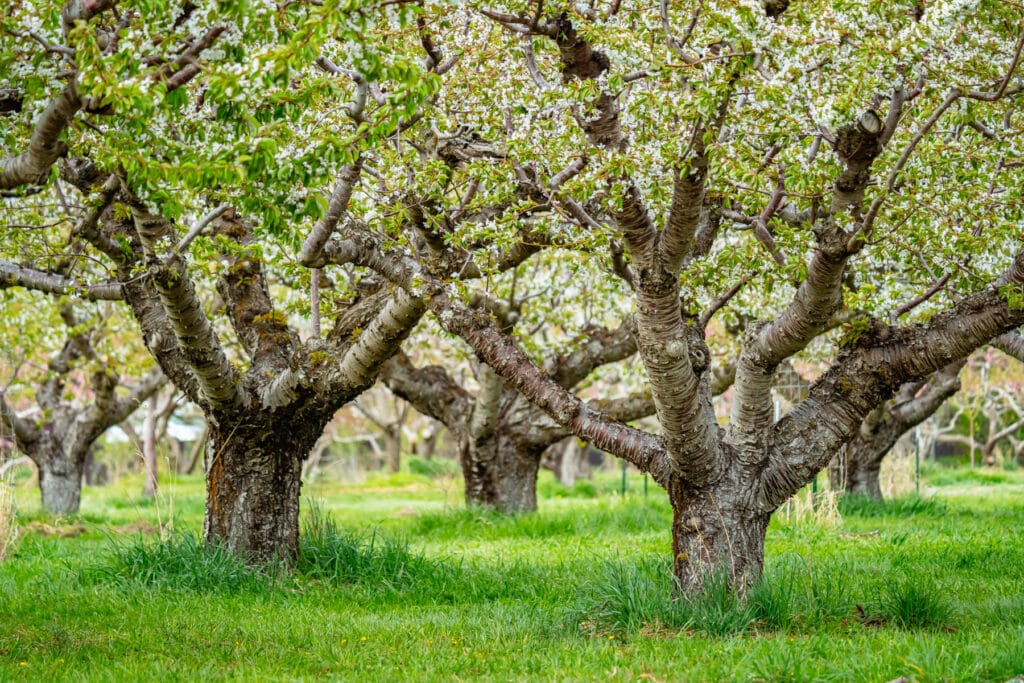
Surface-applied fertilizer often cannot reach tree roots effectively in Davis County’s alkaline soil. The high pH blocks nutrient absorption at the surface, especially iron. Deep root fertilizer is injected below the surface directly into the root zone, delivering iron, phosphorus, and potassium where roots can actually absorb them. This is especially important for older trees showing signs of nutrient deficiency like yellowing leaves with green veins, a common sign of iron chlorosis in Utah. Younger trees and new plantings also benefit from direct root zone feeding.
Fruit trees attract specific insects and have a narrow treatment window in early spring. Dormant oil is applied before buds open, smothering overwintering insect eggs on bark and branches. This is effective against aphids, borers, codling moth, and spider mites. Once blossoms open, the dormant oil window has closed for the season. After blossom, we provide insecticide and miticide treatments as needed through the growing season depending on pest pressure. Timing is critical for both the dormant oil application and the follow-up sprays. We schedule based on actual bud development, not calendar dates.
Ornamental shrubs deal with many of the same insect and stress issues as trees, but on a smaller scale. Aphid infestations, fungal problems, and nutrient deficiency are common in Davis County landscape beds. We treat based on the specific shrub species and the problem we are addressing. Treatment may include insecticide application, fungicide, or targeted feeding depending on what the shrub needs. We also adjust watering and care recommendations so the treatment holds and the problem does not come back the following season.
Utah homes deal with spiders, ants, wasps, box elder bugs, and other pests throughout the year. These services cover exterior prevention, interior treatment, targeted removal for stinging insects, and seasonal control for nuisance pests that migrate toward your home in fall.
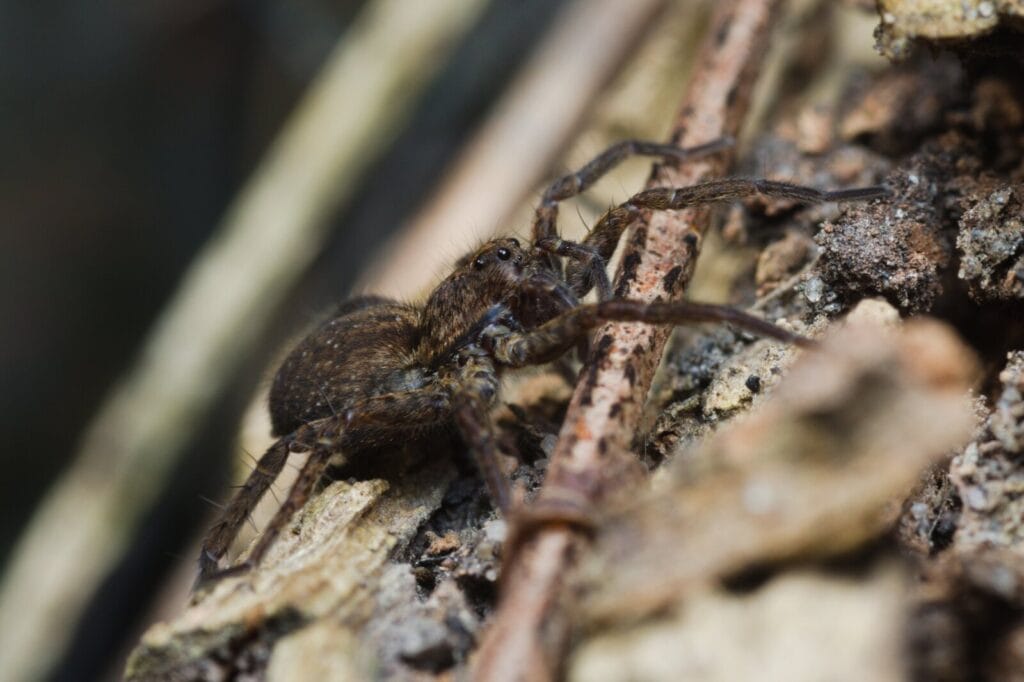
Hobo spiders, wolf spiders, and black widows are all common around Davis County foundations and window wells. Our exterior spider barrier is a residual surface treatment applied to your home’s foundation, lower windows, window wells, and attached garage. It kills spiders and crawling insects on contact when they cross the treated surface. Each treatment lasts up to 45 days. The barrier also works against ants, earwigs, and other crawling insects that approach through the foundation. Window wells collect debris and moisture, making them a common entry point that the barrier specifically targets.
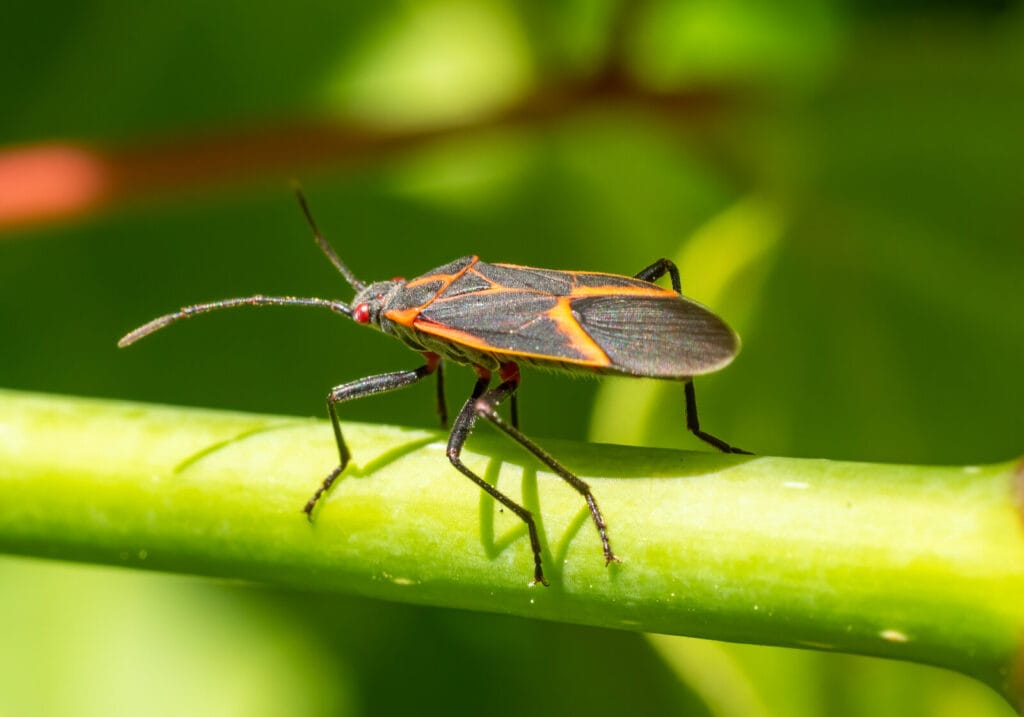
Box elder bugs are common across Davis County. They spend warm months feeding on box elder and maple trees that line yards in Bountiful, Kaysville, Centerville, and surrounding neighborhoods. In fall, they migrate toward warm exterior walls and windows, and they often end up inside homes. Large numbers can gather on south-facing walls and around window frames. We treat box elder bugs with a targeted exterior application to walls, windows, and entry points where they congregate. One treatment typically reduces activity significantly. For homes near mature box elder or maple trees, fall treatment before migration starts gives the best results.
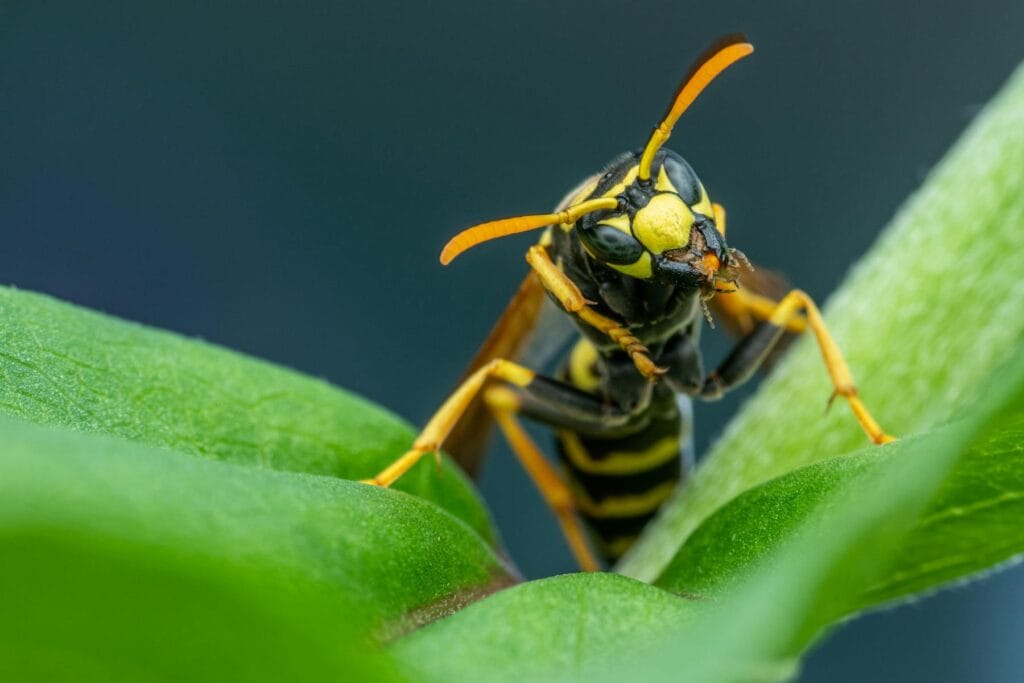
We treat wasps, hornets, and yellow jackets when they are active near your home. Treatment targets active nests and high-traffic areas around eaves, gutters, soffit, fascia, doors, and patios. This is not a preventative treatment. It addresses active infestations and can be applied any time the insects are active. Wasps and hornets build nests in sheltered areas close to your home and become aggressive when disturbed. Yellow jackets often nest at ground level near landscaping and walkways. Contact us as soon as you notice activity and we will schedule treatment.
Our seasonal programs cover scheduled, recurring treatments through the growing season. Services are individual treatments you can add when you need them.
For example, if you are on the Full Season Lawn Program and want to add core aeration in the spring, that is a separate service we schedule alongside your program visits. If your tree starts showing signs of iron chlorosis, deep root fertilizer can be added without signing up for the full Tree and Shrub Program. If wasps build a nest near your front door, we can come treat it regardless of what other programs you are on.
Some services are included in specific programs. Grub control is built into the Insecticide Protection Program. Fungicide treatments are part of the Fungus/NRS Program. But every service listed on this page can also be scheduled on its own.
Every property in Davis County is different. Contact us for a free estimate and we will evaluate your lawn, trees, or home and recommend the right services or programs for your situation.
Phone: 801-451-2220 Text: 801-893-8836